Published June 30, 2026
Is New Construction Actually Cheaper Than a Resale Home Today?

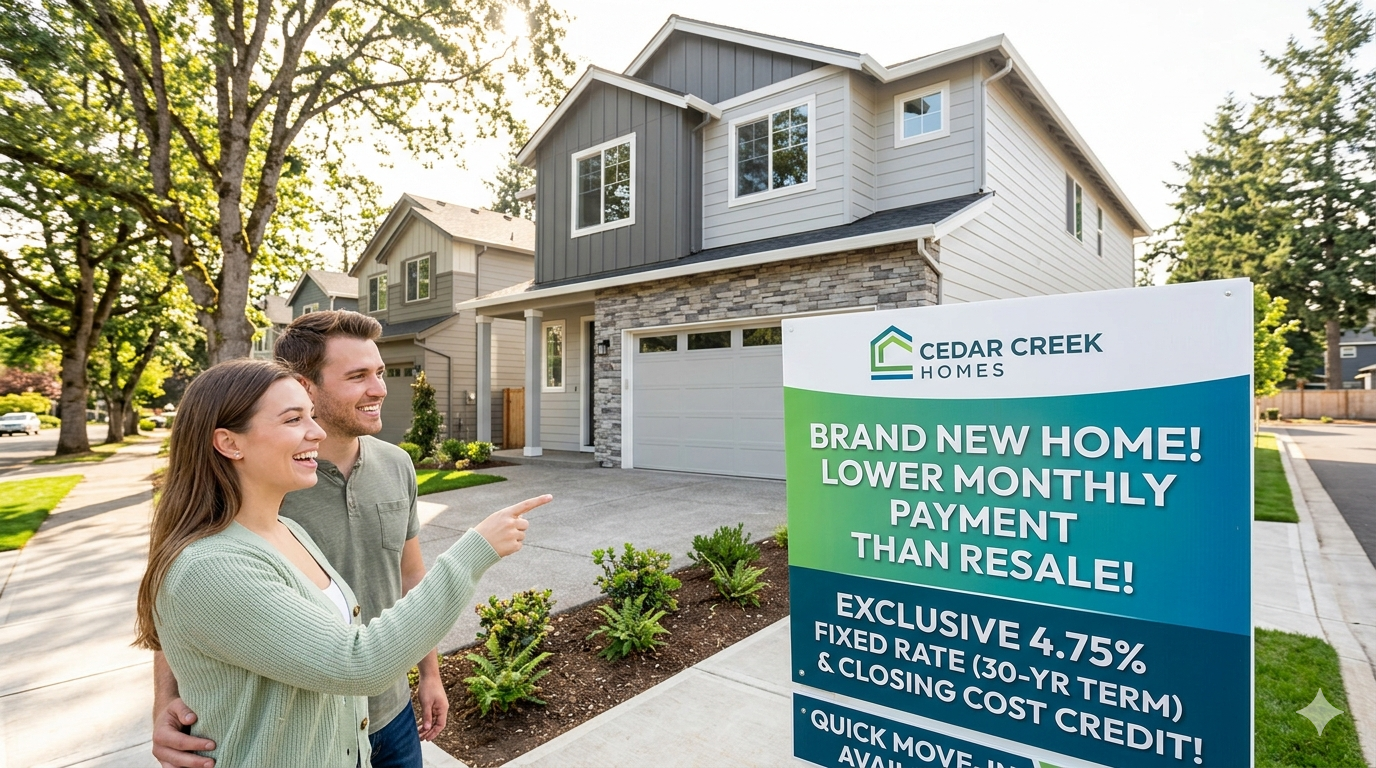
The Great Housing Inversion: Is New Construction Actually Cheaper Than a Resale Home Today?
For decades, the math of home buying followed a predictable rule of thumb: brand-new construction carried a premium. Just like driving a new car off the lot, if you wanted fresh drywall, untouched appliances, and that "new home smell," you typically paid a 10% to 15% price premium over an older, pre-owned home down the street.
But as we navigate the 2026 housing market, we are witnessing a rare historical phenomenon. In a stunning twist, the median price of a new construction home is actually dropping below the price of existing resale homes in several regions across the country.
If you are looking for the absolute lowest monthly payment in today’s environment, the value play has officially flipped. Here is a look at the data behind this shift, how builders are manipulating interest rates to your advantage, and how to negotiate a massive deal with developers.
The 2026 Reality: Sticker Price vs. Monthly Payment
Individual homeowners selling their properties are emotionally invested. They remember the memories made there, they look at what their neighbors sold for a couple of years ago, and they are often willing to sit on the market for months waiting for their "dream price". Furthermore, many resale sellers are locked into ultra-low pandemic mortgage rates, meaning they have no incentive to drop their prices or offer massive concessions.
Homebuilders, on the other hand, are corporations. They operate on volume, carry expensive commercial construction loans, and must move inventory to keep their shareholders happy.
Because high market interest rates (hovering in the low-to-mid 6% range) have squeezed buyer affordability, builders have pivoted aggressively. They are shrinking footprints to hit lower price targets, slashing base prices, and initiating massive "incentive wars" to clear out quick move-in inventory.
The Secret Weapon: The Mortgage Rate Buy-Down
The primary reason a new home is cheaper than a resale home right now isn't just the sticker price—it's the monthly payment. Builders are achieving this by using "bulk forward commitments" with their preferred in-house lenders. They essentially buy millions of dollars in interest rate discounts upfront and pass that savings directly to you.
When you look at new builds today, you will generally see two types of rate buy-downs being advertised:
1. The Permanent Buy-Down
The builder pays a massive lump sum (often using "flex cash" or closing cost credits) directly to the lender to buy down your interest rate for the entire 30-year term. While market rates sit over 6%, builders are frequently offering locked-in fixed rates in the high 4% or low 5% range.
2. The Temporary Buy-Down (e.g., the 2-1 Buy-Down)
The builder puts cash into a subsidized escrow account to artificially lower your mortgage payments for the first few years.
- Year 1: Your interest rate is 2% lower than the market rate.
- Year 2: Your interest rate is 1% lower.
- Years 3–30: The rate steps up to the permanent fixed rate.
The Math in Action: Taking a $20,000 incentive as a rate buy-down rather than a straight price cut can save you hundreds of dollars more every single month because of how heavily it reduces the compounding interest on your loan.
How the Costs Stack Up: Resale vs. New Construction
Beyond the mortgage tracker, the "hidden" first-five-year costs of a home are heavily weighted in favor of new builds right now.
| Cost Factor | Existing Resale Home | 2026 New Construction |
| Typical Mortgage Rate | 6.2% – 6.8% (Standard Market) | 4.5% – 5.5% (With Builder Buy-Down) |
| Closing Costs | 2% – 5% paid out of pocket by buyer | Often $0 (Covered via builder credits) |
| Immediate Maintenance | Average $5,000 – $15,000+ (Roof, HVAC, water heater) | $0 (Everything is brand new and under builder warranty) |
| Utility Bills | Higher due to older insulation/windows | 20% – 30% lower due to strict 2026 energy codes |
How to Negotiate with a Developer
If you want to maximize these historical 2026 discounts, you cannot approach a corporate builder the same way you would a traditional seller. Use these developer-specific strategies:
- Target "Quick Move-In" Homes: Builders hate sitting on completed homes because they actively drain cash flow. Look for inventory that is finished or will be completed within 30 days. This is where developers will stack incentives (price cuts plus rate buy-downs) to get the asset off their books.
- Always Bring Your Own Agent: Do not walk into a new home sales office alone. The helpful representative at the desk works directly for the developer’s bottom line, not yours. Bring an independent agent experienced in new construction who knows what unadvertised structural or financial perks the builder is currently conceding in that specific neighborhood.
- Negotiate "Flex Cash" Over Price Drops: Builders are fiercely protective of their neighborhood's base prices because a lower recorded sales price devalues the remaining lots they still need to sell. Instead of asking for a $15,000 price drop, ask for $15,000 in "flex cash" to be used toward a permanent rate buy-down, premium design center upgrades, or zero out-of-pocket closing costs.
The Bottom Line
If your primary goal is minimizing your out-of-pocket cash at closing and locking in the absolute lowest monthly payment possible, stop fighting over old houses with old problems. Take a look at the corporate inventory near you—the builder incentives of 2026 have turned new construction into the ultimate stealth value play.
Ready to tour the top new construction communities in our market and see what kind of rate buy-downs are available for you? Reach out today to get an expert advocate in your corner!